
Words of the Samurai – Episode 15
The Director Behind the Scenes: Ryōma’s Hidden Role
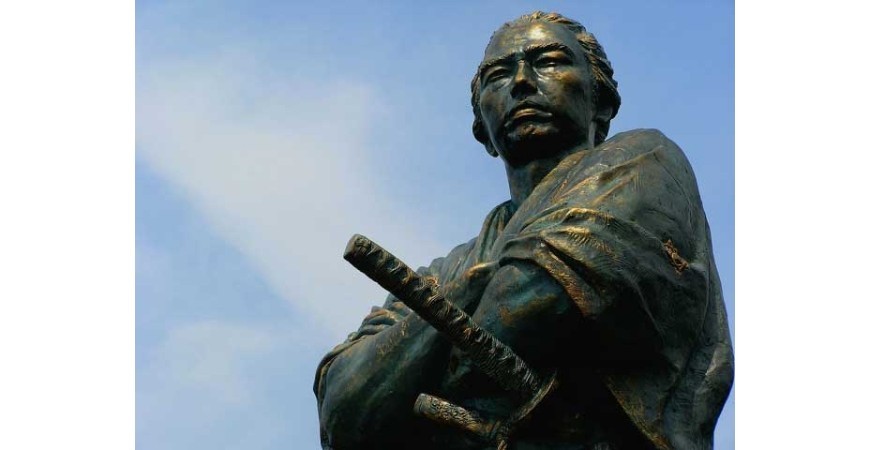
In the fourteenth episode of our "Words of the Samurai" series, we explored Sakamoto Ryōma’s vision for Japan through his metaphor of “washing the country clean.” In this fifteenth article, we focus on a lesser-known yet crucial facet of his legacy: his work behind the curtain during the Meiji Restoration.
While leaders like Saigō Takamori and Ōkubo Toshimichi stood at the forefront, Ryōma chose to guide the revolution from the wings, positioning himself as a true strategist and enabler of change.
Beyond the Sword: Strategic Vision in the Meiji Restoration
Sakamoto Ryōma is often hailed as “the greatest hero of the Bakumatsu era,” but compared to Takasugi Shinsaku, who led the Kiheitai and defeated shogunate forces, or Saigō Takamori, the supreme commander of the Satchō army, his role may seem less defined.
Yet, one anecdote sheds light on his unique position.
In 1865, as the push for the Meiji Restoration was building, Ryōma visited the Kumamoto-born thinker Yokoi Shōnan. After discussing the political situation, he said:
“Sensei, why don’t you relax upstairs, enjoy the company of lovely ladies serving you drinks, and watch the play that Saigō and Ōkubo are putting on? And if they get stuck, perhaps you could offer them a word or two of guidance.”
Yokoi, who never considered himself suited to politics, appreciated the sentiment. And in this moment, Ryōma’s true nature is revealed.
If Saigō and Ōkubo were the actors of the Meiji drama, Ryōma was the director.
Ryōma wielded no army, held no official rank, yet shaped history through insight and influence. His legacy lies not in direct action but in orchestration—uniting factions, guiding leaders, and ensuring that the stage was set for change.
As a quiet director of revolution, he played a role few could match.