
Words of the Samurai – Episode 14
Sakamoto Ryōma and the Vision of a Renewed Japan
During the Bakumatsu period (1853–1868), Japan experienced an unprecedented wave of political and cultural upheaval. The arrival of Commodore Perry’s “Black Ships” in 1853—symbolising the intrusion of Western powers into the Asian sphere—revealed to young Japanese how far their country lagged behind the modern world. This realisation gave rise to a generation of idealists, known as shishi (志士), who strove to build a “new Japan” free from isolation and capable of standing as a modern nation.
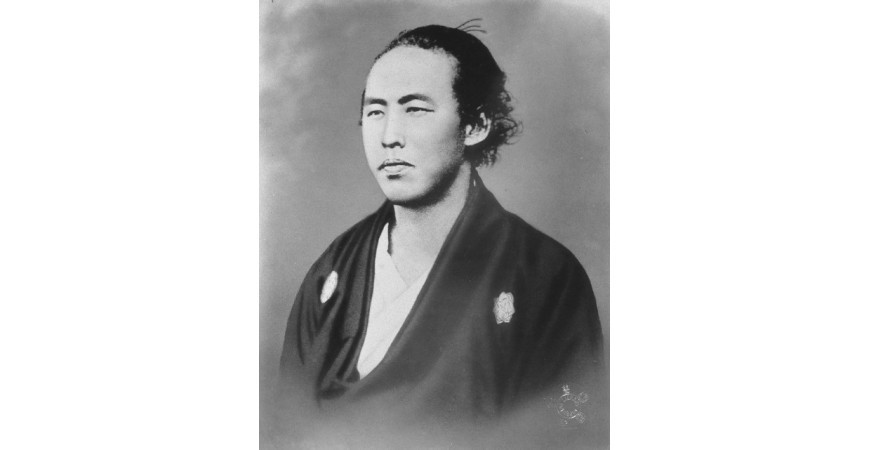
Among the central figures of this movement was Sakamoto Ryōma (1836–1867), a visionary samurai from the Tosa domain. Though his life was cut short at the age of just 31, Ryōma played a decisive role in the political transformation that led to the restoration of imperial rule (taisei hōkan) and the downfall of the Tokugawa shogunate.
The phrase examined in this episode was written by Ryōma in a letter to his sister Otome, and it encapsulates his ideal of radical renewal: “I wish to wash Japan once more” (日本を今一度洗濯いたし申候). This symbolic expression, now famous, reflects his desire to cleanse the country of corruption and contradiction, and to propel it toward the future.
“Washing the Nation”: The Political Meaning Behind Ryōma’s Words
The final years of the Edo period. After witnessing the reality of the outside world through Perry’s “black ships,” the young men of the time rushed across the country, striving to build a “new Japan.”
One phrase that many of them would often say was:
「世に生を得るは事を成すにあり」
“To be born into this world is to accomplish something.”
In essence: “Since we were born into this world, let’s do something great!”
Such passionate energy pervaded Japan at the time.
Sakamoto Ryōma, too, breathed that same air and became one of the shishi—men of spirit. He, too, was driven by a grand vision.
In a letter addressed to his elder sister Otome, Ryōma wrote:
「日本を今一度洗濯いたし申候」
“I intend to wash Japan once more.”
For Ryōma, this “washing of Japan” was the very mission he set out to fulfil.
In December 1867, Ryōma passed away at the age of thirty-one. His death was considered “far too soon.”
Yet, through the “Taisei Hōkan” (Return of Power to the Emperor) he helped initiate, the “washing of Japan” was already nearing completion.
Ryōma had accomplished his mission.
Sakamoto Ryōma’s words were not merely poetic or idealistic—they expressed a concrete political vision and a determined will to reform the nation. His idea of "washing Japan" stemmed from a profound understanding of the limitations of the feudal system and a hope for a more just and modern society. Though his life was short, Ryōma truly did "achieve something" (事を成す), leaving an enduring legacy in Japanese history. His vision inspired a generation, and his spirit still resonates with those who believe in change driven by principle and action.