
Words of the Samurai – Episode 13
Pride in Battle: Facing a Strong Enemy
In our previous episode, we honoured the noblest and most idealistic side of Uesugi Kenshin: the daimyō who sent salt to his enemy out of justice, the man who embodied the principle of "righteousness beyond strength".
But as we had anticipated, history is not made of ideals alone. Kenshin, like any historical figure, had many faces — some virtuous, others more ambiguous. In this new instalment, we return to the “Dragon of Echigo” to explore a lesser-known, more human dimension, through the sharp and irreverent words of the writer Sakaguchi Ango.
With his bold tone, Ango invites us to rethink the concept of “honour”, suggesting that behind the banner of justice might hide a simple delight in warfare. It's an uncomfortable but necessary point of view — one that encourages us to reflect not only on Kenshin, but on all those who made war their calling.
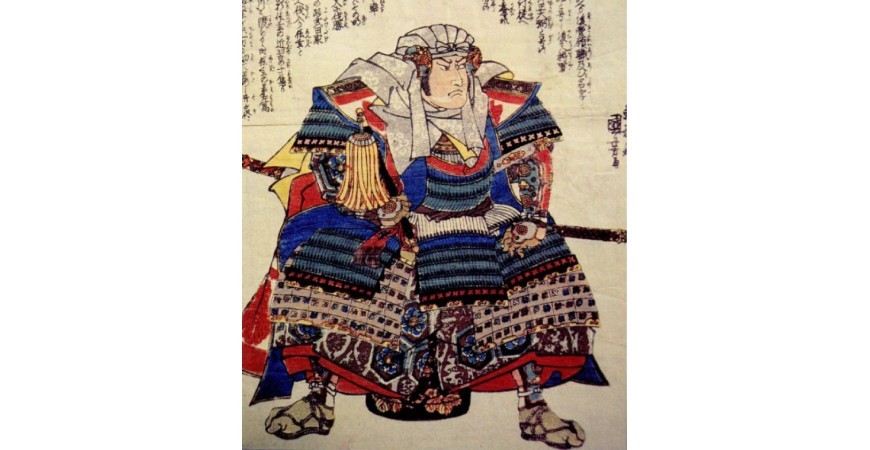
The Warrior Philosophy of Uesugi Kagekatsu, Kenshin’s Heir
In his novel “The Second-Rate Man”, writer Sakaguchi Ango criticizes Uesugi Kenshin, the “Tiger of Echigo,” by saying:
“He goes around preaching justice and loyalty to the emperor, but it’s all a lie. In truth, he simply enjoys fighting for the thrill of it.”
He refers to Kenshin and his disciple and heir Uesugi Kagekatsu as part of the “decadent war faction” – those who use justice as a pretext to indulge in warfare.
This view is unpopular among Kenshin’s fans. Yet it seems that the Uesugi clan did indeed show such a side, as demonstrated by an episode involving Kenshin’s successor, Uesugi Kagekatsu.
When Kagekatsu’s forces laid siege to the castle of Shibata Shigeie, a rebel within their own domain, one of his men captured enemy soldiers and reported, “They were trying to deliver supplies to the castle.”
To this, Kagekatsu replied:
“It would be easy to finish them off, but that would be childish. Spare their lives, give them the supplies, and let them into the castle. Crushing a strong enemy is what truly feels good.”
Like Kenshin, Kagekatsu too seemed to “enjoy war.”
However, it is said that after returning to their castle, the enemy soldiers were suspected by their own allies of being Kagekatsu’s spies, and were ultimately killed.
Uesugi Kagekatsu, heir of Uesugi Kenshin, offers us a glimpse into a lesser-known but deeply genuine side of the samurai ethos: the yearning to face a worthy enemy — one whose defeat brings not only triumph, but meaning. His words are not cruel; they reflect pride, courage, and the unwavering will to fight not out of hatred, but from a sense of principle.
Once again, the voice of the samurai urges us to move beyond simplistic heroism and consider the moral complexity of those who lived in an age where honour was not a slogan, but a daily resolve.