
Words of the Samurai – Episode 11
Yamamoto Kansuke: Seeing All of Japan as One Battlefield
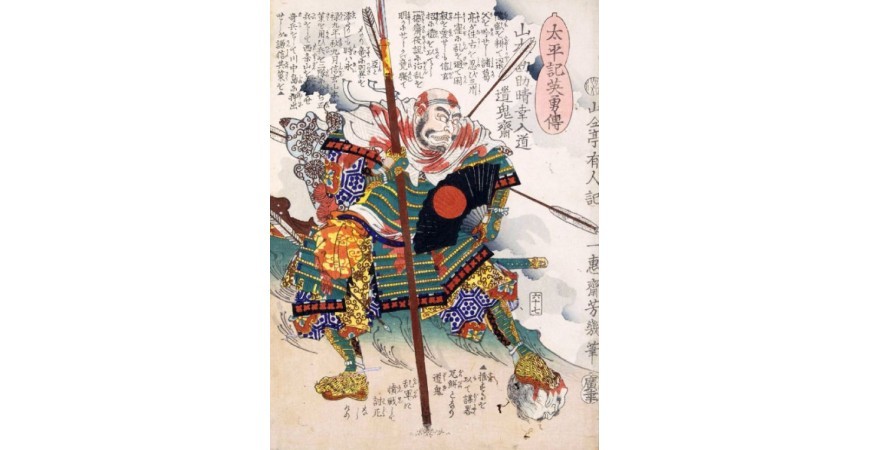
Episode eleven of “Words of the Samurai” brings us a fascinating story about Yamamoto Kansuke—before he became the legendary strategist of Takeda Shingen. As a wandering rōnin, Kansuke didn’t just carry skills with a sword—he carried a map of Japan in his mind.
In the chaotic era of the Sengoku period, countless rōnin wandered from province to province, hoping to find service under a powerful lord.
Among them was Yamamoto Kansuke, a lone warrior who would later earn the title of chief strategist to Takeda Shingen. His journey spanned the entire country—from the remote north of Tōhoku to the southern islands of Kyūshū.
In those days, a rōnin’s worth often came from the intelligence he carried. In a time before newspapers and telegrams, feudal lords craved news from distant provinces. A well-traveled rōnin brought both information and insight.
Some lack the ability to see the bigger picture
Kansuke was taken into the Takeda clan precisely because of his knowledge—but what made him stand out was not the detail of his reports, but their deliberate vagueness.
At his first meeting with Takeda Shingen, Kansuke reportedly said:
“From Mikawa to the east, everything is pretty much the same. So is the land from Owari to Izumi. Even Shikoku, Chūgoku, and Kyūshū can be viewed as one whole.”
Shingen’s retainers laughed at what sounded like nonsense.
“What kind of statement is that?” they mocked.
But Shingen didn’t laugh.
He saw something deeper in Kansuke’s words. Here was a man who saw Japan not as scattered pieces, but as a single, unified landscape—a battlefield without borders.
“If we let this man slip away and he joins another clan,” Shingen thought, “we could regret it.”
At the time, Kansuke was fifty. Shingen, only twenty-two.
Yamamoto Kansuke wasn’t just a warrior—he was a visionary. His ability to see Japan as one interconnected stage of conflict set him apart and became the foundation of his strategic genius. His story reminds us that sometimes, true strength lies not in the sword, but in the way one reads the world.