
Words of the Samurai – Episode 9
A unique quote for this series
This week’s featured phrase stands apart for two reasons: it doesn’t come from a samurai, and it’s a jisei – a final statement spoken before death.
Still, the final words of Ishikawa Goemon, a legendary outlaw of the Sengoku period, carry the same strength and dignity found in the death poems of the greatest warriors.
Though he is often remembered as a kind of Japanese Robin Hood, the historical Goemon was likely a cunning and fearsome criminal.
His grave can be found at Daiunin Temple in Kyoto, where he received an unexpectedly lofty posthumous name – perhaps a nod to the powerful myth that surrounded him.
The final words of Ishikawa Goemon
“Even if all the sand on Ishikawa and Hama’s beaches were gone, thieves will never disappear from this world.”
This defiant, philosophical phrase attributed to Goemon suggests that rebellion is part of human nature.
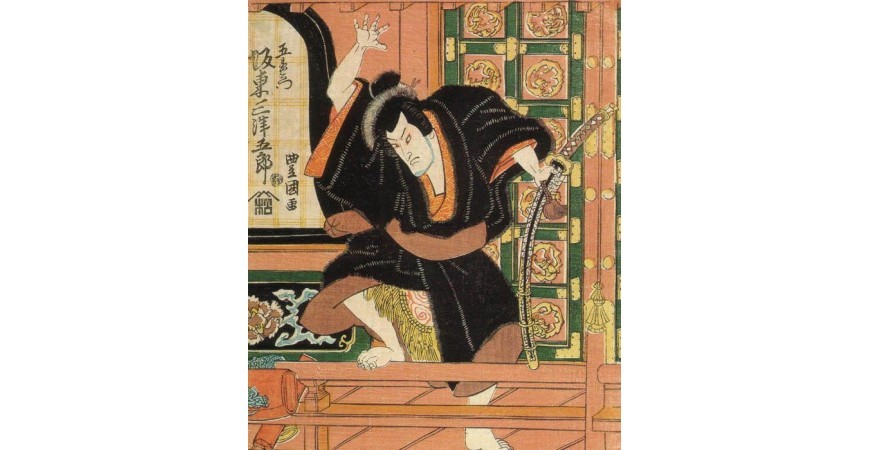
History and legend often blur in Goemon’s tale. In kabuki theatre, especially Sanmon Gosan no Kiri, he’s famously portrayed smoking a pipe and admiring the cherry blossoms from the gate of Nanzen-ji temple, exclaiming:
“What a spectacular view! A spring night worth a thousand ryō? That’s cheap!”
Here, he boldly mocks Toyotomi Hideyoshi, the dominant power of the time, becoming a symbol of resistance beloved by the people.
Stories about Goemon’s origins vary—some say he was a ruined nobleman, others claim he was an Iga ninja who turned rogue after a scandal. None of these versions are confirmed.
The Robin Hood image is likely an Edo-era fiction. Historical accounts suggest Goemon took advantage of troop movements during Hideyoshi’s Korean campaigns to carry out raids in major cities.
He was allegedly hired by Toyotomi Hidetsugu to assassinate Hideyoshi himself, but the plan failed, and all conspirators were arrested.
As punishment, Hideyoshi ordered Goemon’s public execution—along with his mother and son—at Sanjōgawara in Kyoto, turning it into a grim public spectacle.
This brutal display only added to the legend of the man who dared to defy an empire.
Goemon in modern culture
Goemon’s legacy lives on, not just in historical drama, but also in pop culture.
He inspired Goemon Ishikawa XIII, the sharp and silent swordsman from Lupin III, who fights with a sleek shirasaya and lives by his own moral code.
In him, Goemon lives again: a lone warrior, a rebel, and a legend.