
Words of the Samurai – Episode 19
The Art of Discernment: Hōjō Ujiyasu’s Prophecy
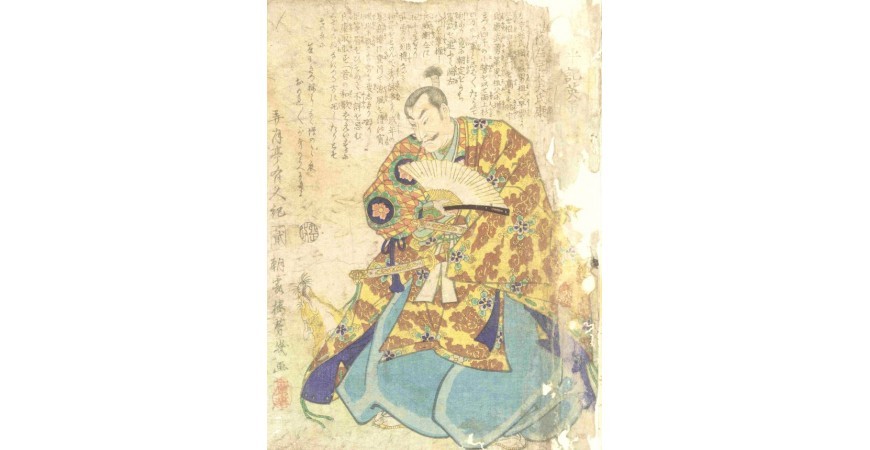
In the 19th instalment of our Samurai Words series, we turn to one of the most respected warlords of the early Sengoku period: Hōjō Ujiyasu, grandson of the renowned Hōjō Sōun and third head of the Hōjō clan. A brilliant tactician and administrator, Ujiyasu earned admiration not only for standing his ground against giants like Takeda Shingen and Uesugi Kenshin, but also for his deft governance. Yet, one quiet scene from his private life reveals the depths of his insight: watching his son Ujimasa eat a bowl of rice with poor judgement, he foresaw the downfall of their entire clan. In the following article, we reflect on how a simple act became a lesson in leadership and foresight.
“He who pours soup on his rice twice is unfit to rule.”
Hōjō Ujiyasu was the grandson of Hōjō Sōun, the heroic figure of the early Sengoku period. He served as the third head of the Hōjō clan, founded by Sōun himself.
It is often said that “the third generation ruins the family,” but Ujiyasu was an exception. He was a commander capable of matching Takeda Shingen and Uesugi Kenshin on equal terms, and at the same time a wise ruler with remarkable administrative skills, praised as “the finest statesman of the Sengoku period.”
Although Sōun left behind many capable descendants, Ujiyasu had little confidence in his own son. One day, watching Ujimasa — who would later become the fourth head of the clan — eating his meal, he said:
“Ujimasa has poured broth over his bowl of rice twice. He does not understand how much broth is needed from the start. A man who cannot grasp even that cannot judge others properly, and a man who cannot judge others will never retain good retainers. A man who pours broth twice on his rice will ruin a domain.”
Those who heard him laughed, saying it was an exaggeration over something as trivial as broth. But Ujiyasu’s prediction proved true: the Hōjō clan began to decline under Ujimasa’s rule and was ultimately destroyed in the time of his son, Ujinao.
Ujiyasu’s keen eye for judging men was accurate even when turned toward his own child.
Samurai culture taught that nothing is too trivial to escape scrutiny, especially when it comes to judging a person’s character. Ujiyasu’s severe reaction to his son pouring soup on his rice twice may seem excessive—but to him, it was a sign of poor judgement, unbefitting a future leader. And indeed, under Ujimasa, the Hōjō clan began its descent. This episode reminds us that great leadership often lies in the ability to see clearly where others see nothing.